Fog-Piercing Vision: The Promise of SWIR Sensors
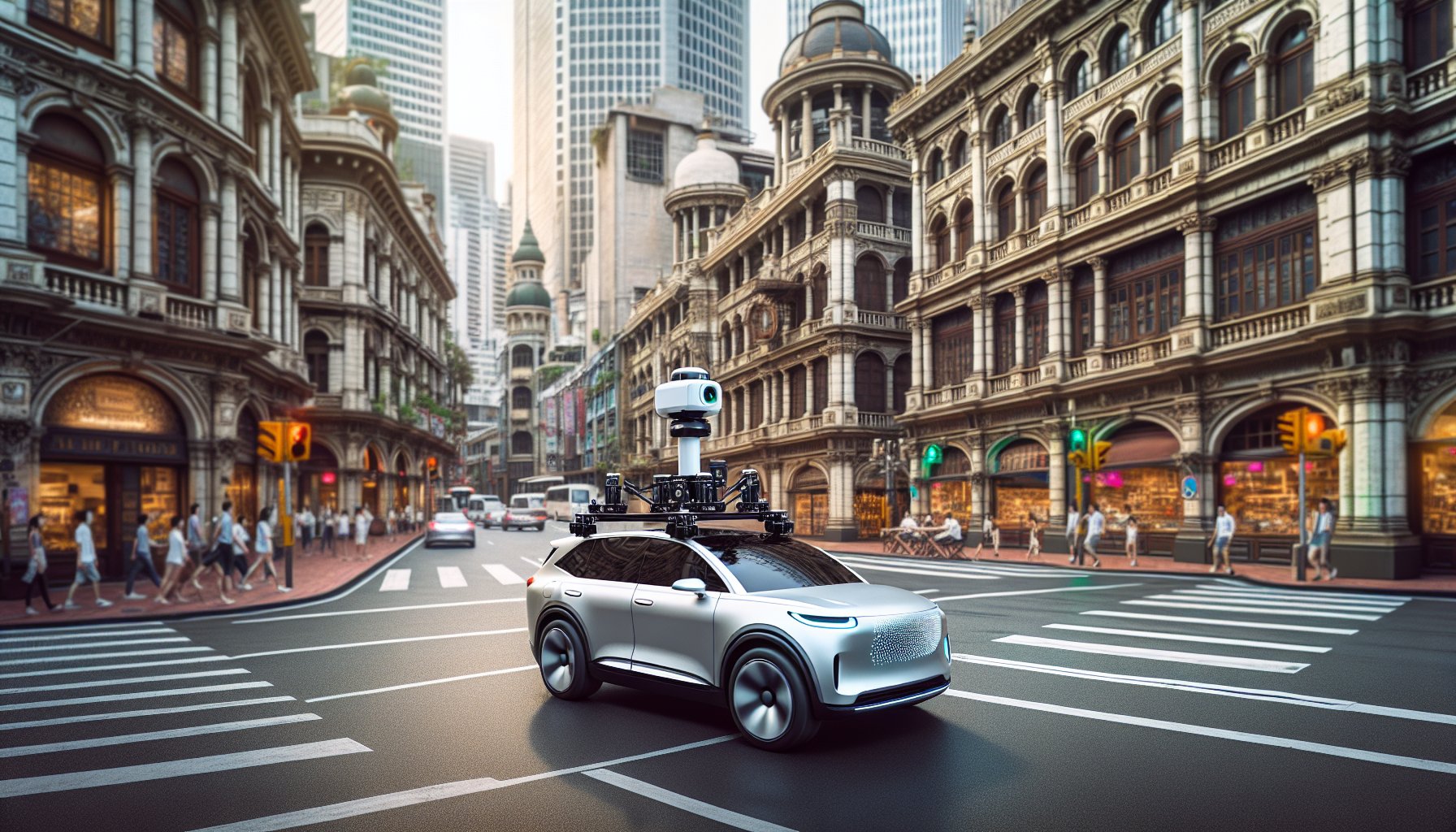
Imagine a self-driving car barreling through thick fog, its cameras blinded and LiDAR scrambling against the haze. That's the nightmare scenario plaguing autonomous vehicles today—until now. Researchers at China's Xidian University have engineered silicon-germanium chips that cut through smoke, darkness, and bad weather, potentially transforming how cars "see" the road. Paired with single-photon avalanche diode tech, these innovations promise sharper imaging at a fraction of the cost, as detailed in reports from Rinnovabili.net.
Meanwhile, Israeli startup TriEye, launched in 2017, is pushing CMOS-based short-wave infrared sensors that claim to slash expenses by up to 1,000 times compared to old-school methods. Drawing from listings in the F6S directory, TriEye's tech delivers depth perception in any conditions, from glaring sun to pitch black. Even manufacturing giant Jabil is jumping in, weaving SWIR advances into 3D cameras for robotics and autos, as engineers Ian Blasch and Andreas Bock noted in a company blog. These developments aren't just tweaks; they're a bold bid to make self-driving safer and more affordable.
But let's not get ahead of ourselves. SWIR, which operates in the 0.9 to 1.7 micrometer wavelength range, has long been trapped in pricey military gear. Now, with silicon-germanium and CMOS stepping in, it's eyeing the mainstream. The shift echoes how CMOS democratized visible-light cameras decades ago, opening doors to everyday use.
Breaking Through Barriers: How SWIR Tech Works
At its core, Xidian's chips blend silicon-germanium with SPAD sensors to snag individual photons, yielding crisp images even in near-total darkness. This setup pierces rain, fog, and dust far better than visible-light systems, which scatter like confetti in bad weather. Rinnovabili.net highlights how it leverages standard semiconductor factories, ditching the exotic—and expensive—indium gallium arsenide materials that once dominated.
TriEye takes a similar tack, using CMOS processes for sensors that scale up cheaply and handle tough lighting. Their focus? High-res data for cars that need to navigate chaos without breaking the bank. Jabil's designs amp this up with laser integrations, creating 3D cameras that shrug off bright ambient light—ideal for bustling highways or sun-drenched fields.
These aren't isolated experiments. Silicon-germanium enables mass production in existing plants. SPAD tech boosts sensitivity in dim spots. CMOS keeps costs down and manufacturing straightforward. Together, they form a toolkit that's complementary to LiDAR and radar, filling in the gaps where those systems falter.
From Military Might to Mainstream Roads: A Tech Evolution
SWIR started in the shadows of defense—think drones spotting targets through smoke or surveillance gear piercing night. Costly InGaAs kept it elite, but as Rinnovabili.net explains, new materials are flipping the script, much like CMOS revolutionized phone cameras. Israel's startup scene, dubbed the "Startup Nation," fuels players like TriEye, which F6S pegged as a top automotive innovator in May 2026.
Adverse weather has always been the Achilles' heel for self-driving tech. Visible cameras choke on fog; LiDAR bounces off particles. SWIR steps in as the reliable sidekick, enhancing perception for full autonomy. Jabil's blog points to broader wins in agriculture and robotics, where these sensors enable precise depth mapping under harsh lights.
The transition feels inevitable, yet it's laced with challenges. Photonics previews from SPIE's 2026 program hint at more optical breakthroughs ahead. Military tech trickling down to consumers? It's happening, but Xidian's prototypes are still lab-bound, while TriEye shows early commercial promise. No major red flags in the reports, though real-world tests will tell the tale.
Roadblocks Ahead: Challenges in Adoption
For all the buzz, SWIR isn't a silver bullet. It shines in fog and dark, boosting safety for advanced driver-assistance systems, but integration with public datasets like AWS Open Data could help validate it in diverse driving scenarios. Jabil underscores its edge in high-light tolerance, perfect for robots or precision farming, yet regulatory hurdles loom large—automotive certifications demand grueling proofs that sources barely touch on.
Cost is the real game-changer. TriEye's bold 1,000x savings claim, via F6S, could flood the market with affordable sensors. Xidian's fab-friendly approach echoes that, moving SWIR from niche to necessity. Still, broader impacts ripple out: better 3D sensing everywhere, from warehouses to highways. As Rinnovabili.net puts it, cameras that see through smoke and fog might soon redefine vehicle autonomy.
Jabil's Blasch and Bock add that recent sensor and laser leaps are fueling 3D designs with serious staying power. Yet gaps yawn wide—no hard numbers on resolutions, efficiencies, or exact wavelengths. TriEye's funding details are murky, and competitors like Sony lurk unmentioned. Verification calls for digging into Xidian's papers and TriEye's demos, plus head-to-heads with LiDAR.
Skeptical Horizon: Will SWIR Deliver on the Hype?
TriEye leads the charge with its CMOS sensors, active and kicking as of May 2026 per F6S listings. Xidian's innovations dazzle in the lab, but they scream for partnerships and trials to hit the streets. Jabil sees SWIR speeding up 3D camera tech for cars and beyond, with SPIE's photonics previews teasing more to come. Timelines? Fuzzy at best, but these are fresh-off-the-press developments.
We're not sold on the revolution just yet. That 1,000x cost cut from TriEye sounds flashy, but without concrete pricing or scale-up proof—legacy systems run thousands per unit—it risks being hot air. Xidian's work is technically sharp, yet sensor tech from academia often bogs down in quals, pushing deployment years out. Regulators will insist on brutal testing across weathers, and sans big-name ties like Mobileye, this could fizzle. SWIR patches real blind spots in autonomous driving, no doubt. But execution pitfalls mean it's more evolution than transformation—don't expect it reshaping roads before 2030.