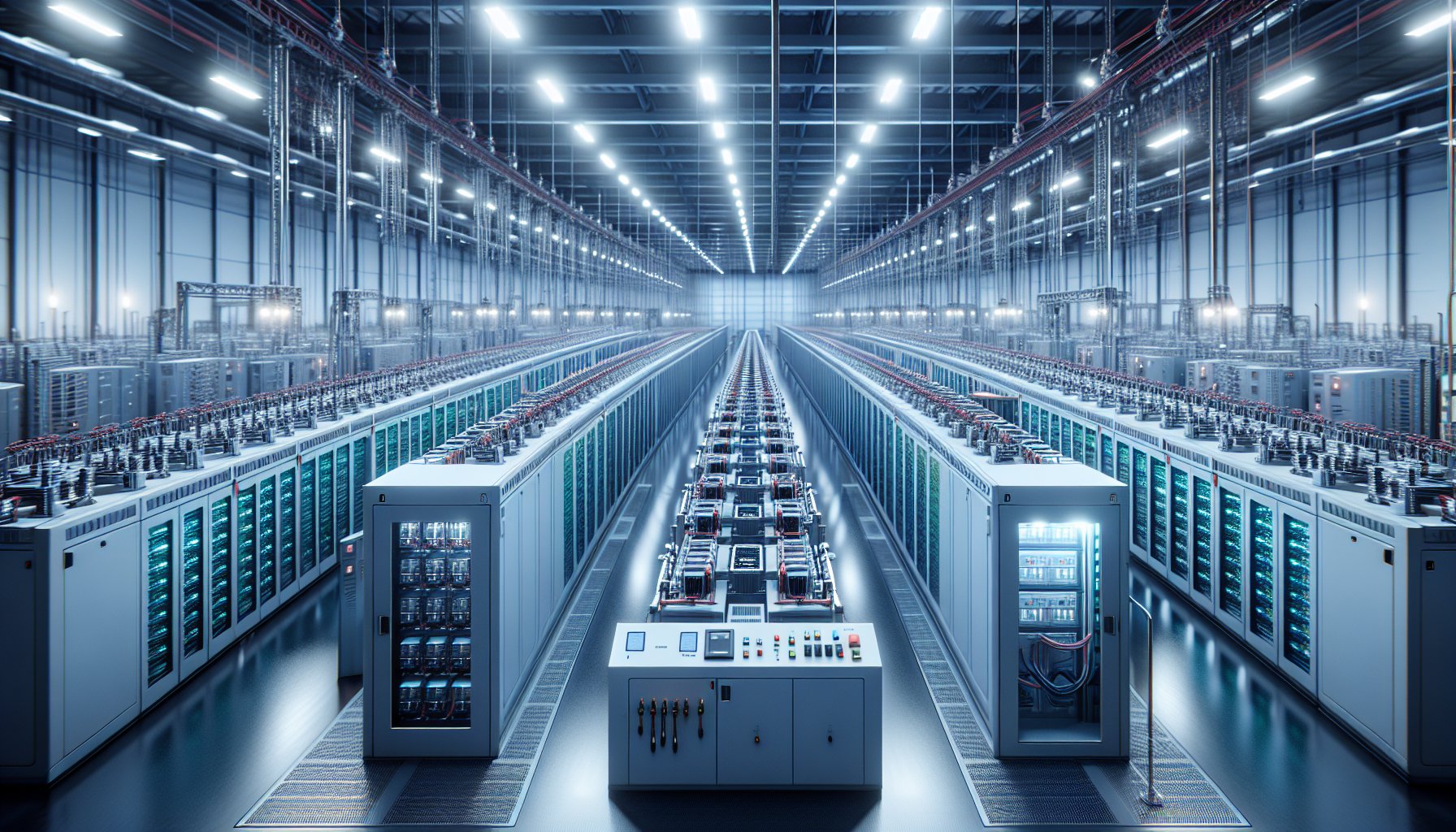
Explosive Growth in Global Energy Storage
Energy storage isn't just keeping up with the renewable revolution—it's leading it. In 2025, installations worldwide soared to 106 gigawatts, a 46 percent jump from the year before, driven by crashing costs and smarter grid connections, as detailed in reports from Morgan Lewis. Looking ahead, 2026 promises even more: projections call for 123 gigawatts and 360 gigawatt-hours of new capacity. In the U.S., the third quarter of 2025 set records with 10.9 gigawatts and 33.7 gigawatt-hours added, pushing the nation toward a cumulative 40 gigawatts by year's end, according to analyses from JD Supra and Morgan Lewis. What was once a backup for finicky solar and wind is now the grid's reliable core.
California tells the story best. By November 2025, the state had racked up 16,942 megawatts of battery storage—a mind-blowing 2,100 percent increase since 2019, per the California Energy Commission. That's already a third of the way to its 2045 clean energy goals, proving batteries can smooth out renewables without leaning on fossil fuels. But it's not just a Golden State phenomenon. In Zambia, a 300-megawatt solar farm with built-in battery systems showcases how developing markets are skipping straight to advanced setups, as pv-magazine has reported. These examples highlight a global pivot: storage isn't stabilizing grids—it's unlocking bold decarbonization in rich and poor nations alike.
This surge brings tension, though. Rapid deployment means grids are evolving faster than regulations or supply chains can keep pace. Yet, with costs plummeting and tech advancing, the momentum feels unstoppable, setting the stage for a transformed energy landscape.
Battery Innovations Pushing Boundaries
At the heart of this boom are batteries evolving to store more energy, longer and cheaper. Lithium-ion packs, perfect for short bursts, now cost under $100 per kilowatt-hour at utility scale, with Angile Energy forecasting a drop to $75–80 by 2026. These deliver 2–4 hours of discharge, boasting cycle lives over 5,000 at 80 percent depth and efficiencies of 85–90 percent. But for marathon storage, long-duration options like iron-air batteries offer up to 100 hours at costs below $50 per kilowatt-hour for energy, while flow batteries hit 10–20 hours with 75–85 percent efficiency using vanadium redox tech. Thermal systems, such as those from Fourth Power, compete with pumped hydro on levelized costs.
Take Fourth Power, an MIT spinout. Their thermal batteries crank up to 1,900–2,400 degrees Celsius, using thermophotovoltaic cells to turn heat into electricity with minimal extra gear, as covered in MIT News. It's a game-changer for cutting costs. Then there's sodium-ion tech from giants like CATL and BYD, hitting densities of 160–180 watt-hours per kilogram—close to lithium iron phosphate's 200–250— but with 20–30 percent lower material costs and better safety in heat. Angile Energy predicts they'll snag 10–15 percent of the stationary market by 2027, ditching scarce lithium and cobalt.
These aren't isolated lab wins. They plug into virtual power plants, pooling resources to top 5 gigawatts globally by 2026. AI algorithms fine-tune dispatch, juicing revenues by 15–25 percent through smart predictions. The result? A tech ecosystem that's denser, longer-lasting, and ready for real-world demands.
U.S. Deployment Hits Warp Speed
America's battery buildup is ferocious. In 2025, the country added 58 gigawatt-hours—a 30 percent rise year-over-year—with Morgan Lewis eyeing over 90 gigawatts more through 2030. Renewables and AI data centers fuel this, where ZincFive's surveys show 57 percent of pros craving higher density and 52 percent demanding agile power management. Quarterly highs, like Q3's 10.9 gigawatts, stem from cheap batteries and policy nudges reshaping the grid.
States are all in. Illinois passed laws in January 2026 requiring 3 gigawatts by 2030, while Rhode Island targets 90 megawatts this year. Federally, the Department of Energy doled out $25 million in late 2024 for 11 manufacturing projects, and the National Science Foundation awarded Binghamton University $45 million in March 2026 for an energy storage hub with Cornell, RIT, and Syracuse. Binghamton's 10-hour system for data centers even scored a $5 million DOE grant in April.
Compare California’s 16,942 megawatts by November 2025—up 2,100 percent since 2019—to the U.S. nearing 40 gigawatts by 2026, and the national 30 percent annual growth looks modest. AI setups need 10-hour backups; ZincFive's nickel-zinc batteries deliver 95 percent efficiency and sub-10-millisecond responses, outpacing lithium-ion's 4-hour caps and 200-millisecond ramps. Globally, U.S. projections hit 411 gigawatts and 1,194 gigawatt-hours by 2030 per Angile Energy, trailing China's lead but closing fast. Supply chains and commercialization hurdles linger, especially for academic prototypes without solid cost data.
AI Meets Long-Duration Power
AI's voracious appetite is rewriting storage rules, demanding batteries that handle wild power swings in data centers. ZincFive reports 52 percent of experts focusing on AI-tailored management, boosting nickel-zinc adoption for their compact, low-upkeep designs. Long-duration tech from Binghamton and UT Dallas, fueled by a $30 million push, promises over 10 hours—crucial for taming AI spikes that jolt grids by 20–30 percent.
Fourth Power's scorching thermal batteries shine here, dodging chemical degradation in long cycles and slashing equipment needs, as MIT News explains. Zambia's 300-megawatt solar-battery hybrid, per pv-magazine, hints at off-grid AI potential in emerging spots, even if details on efficiency are thin. This mashup of AI and long-duration storage isn't futuristic—it's the fix for today's energy crunches.
Policies Fueling the Fire
Governments are the spark. The EU's Flexibility Needs Assessments by July 2026 echo U.S. moves like Illinois' 3-gigawatt mandate, elevating storage to must-have status, as JD Supra outlines. Over 24 states, plus D.C. and Puerto Rico, chase 100 percent clean energy, using batteries as wire-free upgrades amid coal's exit.
Economics seal the deal: $75–80 per kilowatt-hour prices mean payoffs in under five years. Morgan Lewis sees global capacity reaching 411 gigawatts by 2030, favoring renewables with storage. But supply chain blind spots post-policy changes add risk, and NSF's $45 million for New York hubs, while hefty, needs better market bridges for scale.
Betting Big on a Battery Future
We're bullish but clear-eyed: the U.S. push to 90 gigawatts by 2030 banks on sodium-ion and long-duration tech, but overbuilding looms if AI hype fizzles or chains snag. California's 17,000-megawatt feat shows what's possible, yet sodium-ion's shorter cycle life—potentially 20 percent below lithium's 5,000—could erode returns without fixes. The DOE's $25 million manufacturing splash risks quantity over quality. To thrive, enforce 85 percent efficiency minimums now—thermal innovators like Fourth Power need field tests to prove their edge. Policies must prioritize proven tech to avoid subsidizing flops.
Globally, 123 gigawatts in 2026 could build to 2 terawatts by 2035. U.S. growth depends on AI-hardened systems like nickel-zinc, while emerging markets go storage-first. Unverified claims, like Fourth Power's efficiencies or sodium-ion's scale, need scrutiny. But with costs diving and mandates biting, this sector will redefine power. California's leap since 2019 proves it: smart investments deliver. The path forward demands swift R&D-to-deployment pipelines—no more delays if we want reliable, clean energy dominance.