Finnish Startup's Ambitious Battery Breakthrough Announcement
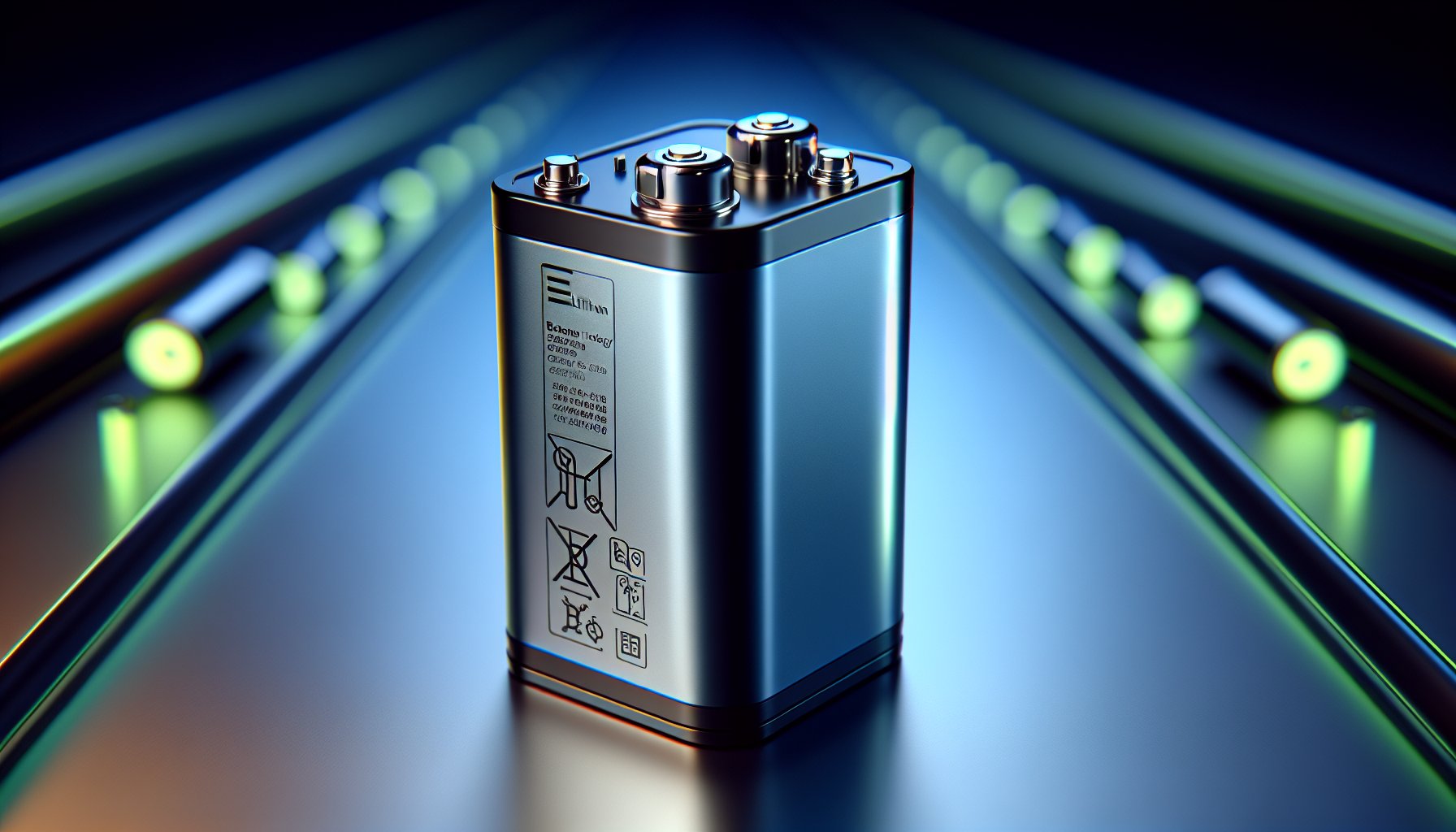
HELSINKI (AP) — Donut Lab, a Finnish startup, unveiled what it describes as the world's first production-ready solid-state battery for electric motorcycles at CES 2026 in January. The company promised an energy density of 400 watt-hours per kilogram, full charges in five minutes and a lifespan of 100,000 cycles, according to statements reported by IEEE Spectrum. While industry experts labeled the claims impossible or fraudulent, independent tests by Finland's VTT Technical Research Centre in February and March 2026 partially confirmed the fast-charging capabilities.
The announcement connects to Verge Motorcycles, with a production deadline that expired March 31 without verified deliveries, based on analyses in Intern Pierre's Substack. Donut Lab spun off from Verge in August 2024 and invested in Nordic Nano in October 2025, whose technology features amorphous titanium dioxide nanostructures and pseudocapacitance—potentially aligning with Donut's design, per the Substack. Critics, however, question whether this is a true solid-state battery or a hybrid capacitor, as Donut has not disclosed its full chemistry, IEEE Spectrum reported.
This development emerges amid ongoing skepticism in the electric vehicle sector, where solid-state batteries have long promised superior performance but remain uncommercialized. Donut positions itself as an innovator, building on Verge's hubless motor technology.
Core Specifications and Independent Testing Results
Donut Lab detailed the battery for the Verge TS Pro motorcycle, claiming:
- An energy density of 400 Wh/kg, surpassing typical lithium-ion batteries at 200-300 Wh/kg.
- Charges from 0% to 100% in five minutes, or 0% to 80% in 4.5 minutes at 11C rates on a 26 ampere-hour cell.
- A lifespan of 100,000 cycles.
- Operation from -30°C to 100°C without rare earth materials, at costs below lithium-ion equivalents.
These specifications stem from Donut's CES 2026 announcements, as covered in IEEE Spectrum and the YouTube channel Tech West Future. The battery cells measure 172 by 74 by 10.6 millimeters in a pouch format, with packs providing 20.2 or 33.3 kilowatt-hours for the motorcycle, IEEE Spectrum reported.
VTT, a state-owned research center, began testing samples Feb. 23, 2026. The tests verified fast charging at 11C rates, achieving 0% to 80% in 4.5 minutes with capacity retention of 98.4% to 99.6% after extreme charges, according to LinkedIn posts by Julian Renpenning and Intern Pierre's Substack. VTT also confirmed low self-discharge and stability at high temperatures, though it did not evaluate energy density or cycle life, per VTT report VTT-CR-00092-26 discussed on Hacker News.
Donut CTO Ville Piippo defended the technology, saying, "If the world is pouring billions and billions of dollars into solid state, why haven’t they figured this out? The answer is the same as for our motors, that we are doing things a different way," according to IEEE Spectrum.
Skepticism from Industry Leaders and Broader Context
Experts from major battery companies dismissed Donut's claims outright. SVOLT Energy Chairman Yang Hongxin said, "That battery doesn’t exist in the world. All the parameters are contradictory…any technician with basic knowledge would recognize it as a scam," per IEEE Spectrum and Intern Pierre's Substack. CATL's head of off-China operations, Ulderico Ulissi, called the claims "clearly fake," according to the Substack. University of Chicago Professor Shirley Meng highlighted the lack of disclosed chemistry, stating, "Anyone who does not reveal the chemistry cannot be credible," as reported in the Substack.
This backlash reflects patterns in the EV battery industry, where solid-state technologies promise higher density and faster charging but have yet to reach commercial scale despite investments from firms like CATL, BYD, Factorial and QuantumScape, IEEE Spectrum noted. Donut casts itself as an outsider innovator, leveraging Verge's in-wheel motor advancements.
Broader trends underscore China's dominance through companies like CATL and SVOLT, with a focus on high-density cells for vehicles. Donut's CES reveal targeted EV range anxiety, aiming to pair with Verge's TS Pro and potentially outpace competitors like BYD, per IEEE Spectrum. Hacker News discussions on the VTT results noted that the battery "behaves just like any other battery is expected to behave in same testing," based on the March 2026 report.
Production Hurdles and Lingering Uncertainties
Donut targeted production integration by March 31, 2026, for an initial 350 units in Verge motorcycles, according to Intern Pierre's Substack. By April 2, the deadline had passed without shipment evidence. EU and U.S. certifications are still pending, pushing U.S. deliveries to the fourth quarter of 2026, the Substack reported.
Key gaps in verification remain. No independent tests have confirmed the 400 Wh/kg density—which critics say could be verified by simple weighing—or the 100,000-cycle lifespan, despite five VTT reports, per the Substack. Physics challenges persist, as high density, long cycles and ultra-fast charging seldom align, sources in IEEE Spectrum and Hacker News indicated. Donut counters via its "idonutbelieve" site and videos, emphasizing a unique approach, but skeptics highlight untested core specs.
The Nordic Nano investment fuels doubts about whether the battery is fully solid-state without liquid electrolytes or merely a pseudocapacitive hybrid, according to IEEE Spectrum and Intern Pierre's Substack. Donut has not confirmed the connection.
Weighing Hype Against Potential in EV Innovation
Donut's partial validation on charging is noteworthy but not groundbreaking, as other batteries achieve similar rates quietly. The absence of density and cycle proofs, combined with the missed deadline, suggests potential overpromise rather than revolution.
Looking ahead, full disclosure and comprehensive independent testing could validate Donut's claims, potentially disrupting the EV market. Investors and enthusiasts should monitor certified deliveries and road performance before committing, as this may echo past hype from companies like QuantumScape. If proven, it could accelerate solid-state adoption; otherwise, it risks fading as another unfulfilled promise in battery tech.