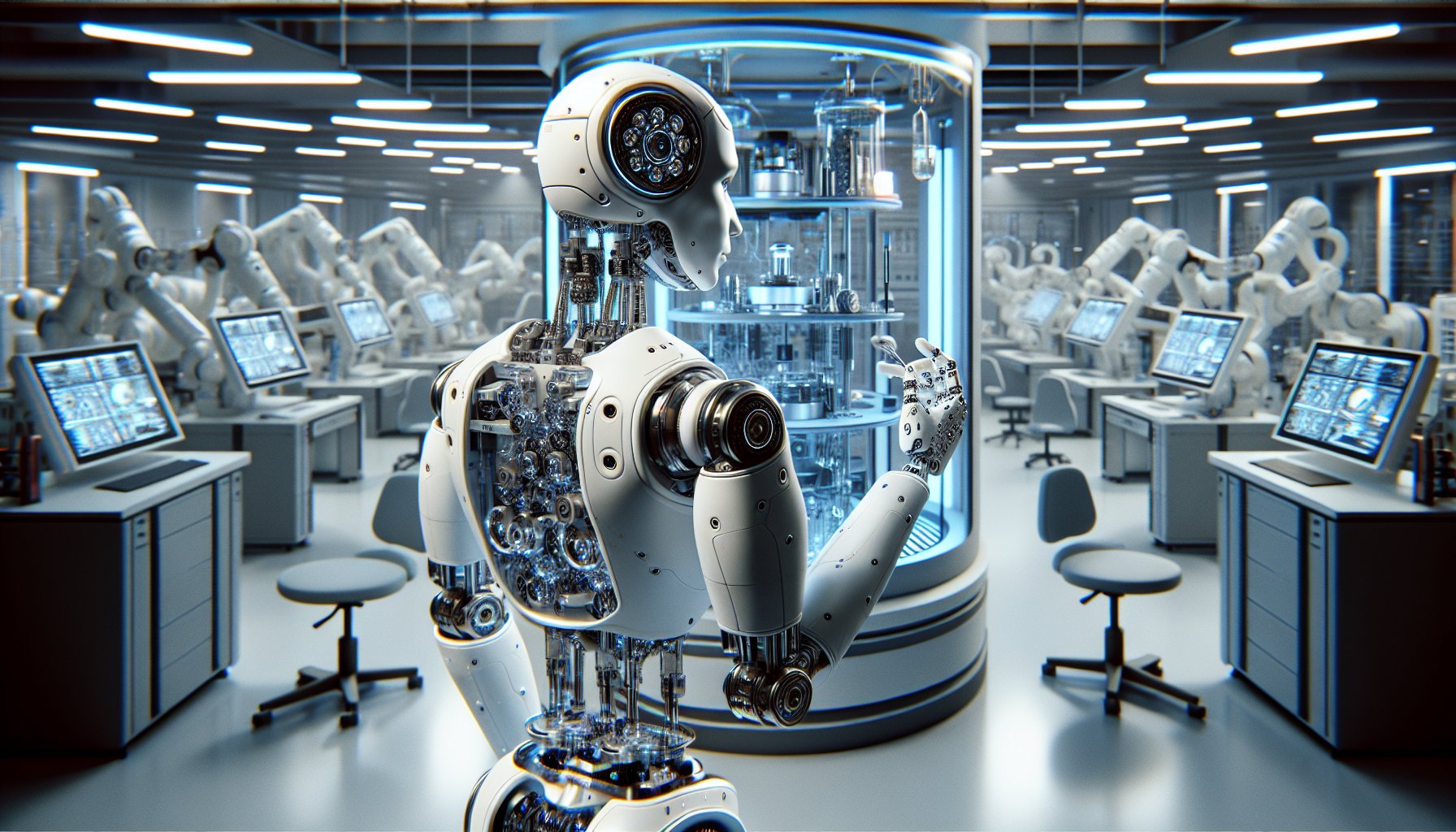
Atlas Takes the Spotlight at CES
The crowd at CES 2026 buzzed as Boston Dynamics' Atlas robot strode onto the stage, its joints whirring with an eerily human grace. This wasn't just another demo; Atlas clinched the Best Robot award for its natural gait and 360-degree rotating joints, as reported by Chosun. Owned by Hyundai Motor Group since their $1.1 billion acquisition in 2021, Boston Dynamics is charging into industrial applications, but the win underscores a bigger truth: robotics leadership is a crowded, chaotic race with no clear frontrunner.
Hyundai's bet on Boston Dynamics aims to fuse robotics with mobility tech, creating bots that could redefine factory floors. Yet, sources across the industry point out that no single company or lab holds undisputed dominance. Leadership feels fragmented, split between flashy commercial players and quiet academic powerhouses, all vying for a piece of the humanoid future.
The Crowded Field of Robotics Contenders
Boston Dynamics touts Atlas as a game-changer, with its site boasting unmatched strength and autonomy for tough industrial tasks. But zoom out, and you'll see rivals staking their claims. Carnegie Mellon University stands out for its robust robotics ecosystem, while Mujin, under CEO Issei Takino, dominates automation in warehouses and beyond.
Niche innovators add to the mix. OC Robotics, snapped up by GE Aviation in 2017, excels in snake-arm tech for tight spaces like engine inspections. Then there's Apptronik, which raised $14.6 million from investors like Capital Factory and Grit Ventures to push its Apollo humanoid into commercial realms. Figure AI, meanwhile, landed a whopping $675 million from heavyweights including NVIDIA and OpenAI, fueling its Figure 01 bot for manufacturing and logistics.
Academic stars shine just as bright. In 2024, MIT's Daniela Rus, Carnegie Mellon's Takeo Kanade, and the University of Pennsylvania's Vijay Kumar split the John Scott Award and $10,000 each, as detailed in a PR Newswire release. Their work on robotics advancements has quietly improved everyday life, from disaster response to elder care.
What ties this fragmentation together? Self-promotion often trumps hard metrics like revenue or market share. Without unified benchmarks, it's tough to declare a winner—Atlas might dazzle, but Apollo's production partnerships could steal the show.
Milestones That Shaped the Humanoid Boom
Humanoid robots didn't spring up overnight. Back in 1972, Waseda University's WABOT-1 took the first shaky steps, grasping objects and walking. Fast-forward to 2000, and Honda's ASIMO was climbing stairs and chatting like a polite host, setting the stage for today's agile machines.
Boston Dynamics entered the fray with Atlas in 2013, evolving it from parkour stunts to industrial powerhouse. Hyundai's acquisition supercharged this, with a press release promising "exciting mobility experiences" through robotics. Now, integrated with automotive tech, Atlas is eyeing real-world jobs in unpredictable environments.
Funding waves are accelerating the shift. Apptronik teamed up with Jabil in 2025 for mass-producing Apollo, targeting factory and logistics floors. Figure AI's massive round highlights AI's growing role in making bots smarter. Even Mujin flexed at the 2025 International Robot Exhibition, proving automation's rapid strides.
Carnegie Mellon has been grinding away for over 40 years on robots for extreme spots, like deep oceans or lunar surfaces. Their new 150,000-square-foot Robotics Innovation Center, opening in February 2026, promises to bridge academia and industry, potentially sparking the next big leap.
Global Rivalries and Industry Shifts
North America leads the humanoid charge, with players like Agility Robotics, Kindred, and NASA's bold experiments. But Japan isn't far behind—Mujin, SoftBank, and Hanson Robotics keep the competition fierce. NVIDIA's tie-ups underscore how AI is supercharging autonomy, turning clunky bots into adaptable workers.
The broader push is toward "physical AI," tackling labor gaps in manufacturing, logistics, and energy sectors. As Jabil's blog points out, humanoids beat specialized robots in messy, unstructured spaces, but affordability and scaling are stubborn roadblocks. Mass adoption hinges on production deals, like the one between Jabil and Apptronik.
Hyundai's strategy could transform workspaces by blending robotics with vehicles, though Jabil hints at Boston Dynamics' rising valuation without naming numbers. Contradictions abound: Atlas wins awards, but without head-to-head tests against rivals like Figure 01, leadership feels more like hype than hard proof.
Academia remains the unsung hero. Carnegie Mellon's center focuses on autonomous systems for the harshest conditions, while award winners like Rus, Kanade, and Kumar have revolutionized the field, dramatically boosting quality of life as PR Newswire put it.
Betting on Bots: The Road Ahead
Forget the quest for a single robotics kingpin—this field thrives on collaboration, not crowns. Boston Dynamics' CES triumph positions Atlas as a strong contender for industrial dominance, but watch Apptronik and Figure AI surge ahead if they nail mass production. We're betting on humanoid robots hitting factory lines by 2028, powered by AI breakthroughs and partnerships that sidestep regulatory snags in labor integration.
Skeptics recall past flops, but the momentum feels real. Academia's steady innovations at spots like Carnegie Mellon and MIT will fuel commercial wins, turning fragmented claims into collective progress. In the end, the real leader might not be a company—it's the tech ecosystem pushing robots from novelty to necessity.