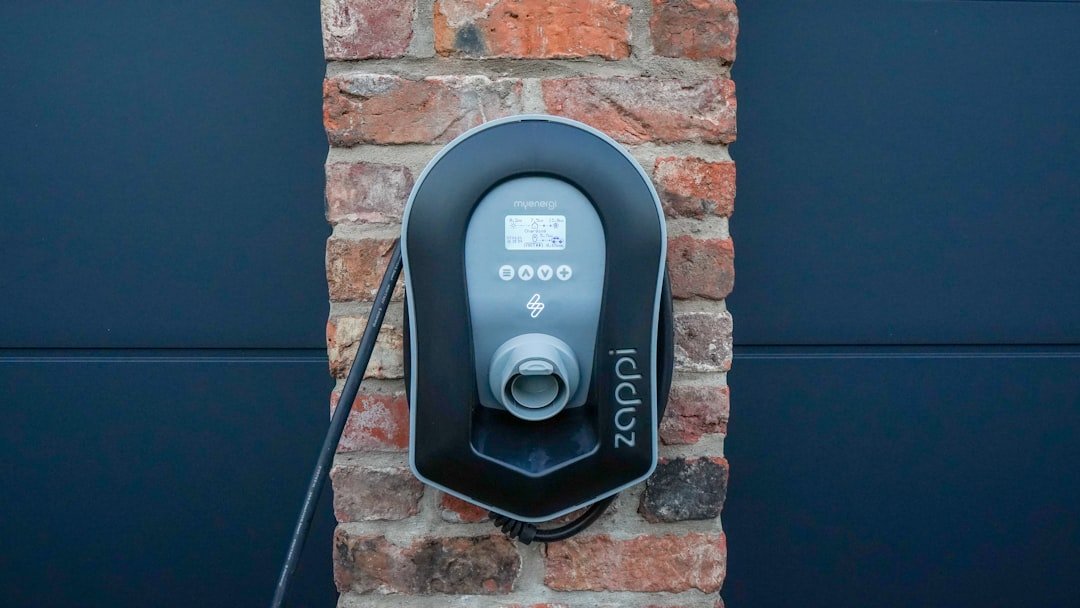
The Explosive Surge to 20 Million Chargers
China's electric vehicle charging network crossed a pivotal threshold in December 2025, surpassing 20 million units and reshaping the landscape of new energy vehicle adoption. This milestone, reported by the National Energy Administration through outlets like Business Today and China Daily, underscores a rapid acceleration: the first million chargers took 13 years to install, yet the network doubled from 10 million to 20 million in just 18 months during 2025. Such growth supports over 40 million new energy vehicles, effectively banishing range anxiety across the nation. Public chargers numbered 4.717 million, up 31.9 percent year-over-year, while private installations reached 15.375 million, surging 56.2 percent, according to NEA data cited in Pakwheels and Interesting Engineering. This infrastructure boom, with public facilities delivering a combined 220 million kilowatts of rated power at an average of 46.5 kilowatts per unit—a 33 percent efficiency increase—signals China's dominance in scaling electric mobility.
Tracing the Timeline of Infrastructure Expansion
The trajectory of China's charging network reveals a pattern of exponential growth tied directly to policy and technological momentum. Starting from modest beginnings, the infrastructure hit one million units after 13 years, as noted in NEA reports via China Daily and Pakwheels. By contrast, the leap from 10 million to 20 million occurred within 18 months in 2025 alone, driven by aggressive deployments. November 2025 figures stood at 19.32 million total chargers, with 4.63 million public units offering 210 million kilowatts and an average of 45.34 kilowatts per unit, per NEA data in Qiushi Theory and Interesting Engineering. December added 770,000 units—92,000 public and 678,000 private—pushing the year-end total to 20.092 million. Earlier benchmarks align: the first quarter of 2024 saw 716,000 additions, according to the China Electric Vehicle Charging Infrastructure Promotion Alliance via SCIO and Xinhua. This progression mirrors new energy vehicle sales, which reached 16.49 million in 2025, up 28.2 percent and comprising 48 percent of total vehicle sales, as reported by the China Association of Automobile Manufacturers through Pakwheels.
Highway coverage now stands at 98 percent with 71,500 charging points, while 19 provinces achieve full township-level access, emphasizing a rural push that extends beyond urban centers, per Interesting Engineering. These developments form part of the "New Infrastructure" initiative, which prioritizes charging alongside 5G networks to unlock investments and support grid consumption exceeding 10 trillion kilowatt-hours in 2025, up 5 percent, according to NEA via CnEVPost.
Dissecting Public and Private Growth Metrics
Public charging infrastructure in China demonstrates robust scalability, with 4.717 million units by year's end providing 220 million kilowatts of total rated power. The average power per unit climbed to 46.5 kilowatts, a 33 percent year-over-year gain in efficiency, fueled by the proliferation of high-power direct current fast chargers, as detailed in NEA reports through Interesting Engineering and CnEVPost. Private chargers, meanwhile, totaled 15.375 million and contributed 134 million kilovolt-amperes of capacity, reflecting a 56.2 percent annual increase. Monthly data highlights the pace: November's 19.32 million units included 4.63 million public chargers at 45.34 kilowatts average, with December's additions alone accounting for significant capacity boosts, per Qiushi Theory.
Key specifications from the network include:
- Total chargers: 20.092 million (end-December 2025).
- Public segment: 4.717 million units, 220 million kW combined power, average 46.5 kW per unit.
- Private segment: 15.375 million units, 134 million kVA capacity.
- Growth rates: Public up 31.9% YoY; private up 56.2% YoY.
- Comparative additions: Q1 2024 at 716,000 units versus December 2025's 770,000.
These metrics contrast sharply with earlier years, where 2023 and early 2024 additions were steady but less explosive, as per CGTN and SCIO reports. The shift toward high-power setups, with direct current chargers exceeding 150 kilowatts growing at a 26.41 percent compound annual rate, positions China ahead in fast-charging density, according to Mordor Intelligence.
Technological Leaps Driving Efficiency
Advancements in charging technology have propelled this infrastructure to new heights, particularly with ultrafast systems and smart integrations. BYD's deployment of 1,000-kilowatt stations in March 2025 enables adding 300 kilometers of range in five minutes, a capability highlighted in Mordor Intelligence analyses. Vehicle-to-grid pilots, initiated by the National Development and Reform Commission in April 2025 across 30 sites in nine cities, incorporate internet-of-things and artificial intelligence for load management and time-of-use tariffs. Market segments show alternating current chargers holding 57.21 percent share, Level 2 units (7.1 to 22 kilowatts) at 43.67 percent, and over-350-kilowatt systems for trucks expanding at 37.21 percent CAGR, per Mordor Intelligence.
Notable partnerships amplify these innovations: XPeng and Volkswagen announced in January 2025 plans for over 20,000 high-power liquid-cooled stations across 420 cities, integrating megawatt platforms with liquid-cooled cables and buffer batteries. Such systems address peak demand, contrasting with slower alternating current dominance in earlier deployments. The overall market, valued at USD 25.60 billion in 2025 and projected to reach 37.61 billion in 2026, aims for a 2:1 vehicle-to-charger ratio by 2030, evolving toward 1:1, as forecasted by Mordor Intelligence.
Ripples Across Global EV Ecosystems
China's charging milestone exerts profound influence on global electric vehicle dynamics, enabling mass adoption that accounts for 62 percent of worldwide EV production and 77 percent of batteries, according to the Information Technology and Innovation Foundation. This infrastructure fosters a positive feedback loop with sales—16.49 million new energy vehicles in 2025 alone—driving emissions reductions and export surges, with shipments up 851 percent from 2020 to 2023, per ITIF. Regional efforts, like Hainan's target of 750,000 chargers for 1.55 million EVs by 2030, exemplify scalability for emerging markets, as noted in Mordor Intelligence.
For tech investors and auto executives, the USD 37 billion market projection signals lucrative opportunities in partnerships and tech exports, yet it exposes vulnerabilities in grid strain, with consumption at 10 trillion kilowatt-hours. Policymakers elsewhere must reckon with China's blueprint: rural and highway coverage at 98 percent challenges Western urban-centric models, potentially accelerating green transitions but risking overreliance on Chinese supply chains.
Charting the Road to 28 Million by 2027
Government ambitions, outlined in the October 2025 three-year action plan from the National Energy Administration and National Development and Reform Commission, target 28 million charging facilities by end-2027, with public capacity exceeding 300 million kilowatts to support 80 million EVs, as reported in Qiushi Theory and China Daily. This roadmap builds on 2025's momentum, prioritizing high-power direct current and vehicle-to-grid expansions to achieve a 1:1 vehicle-to-charger ratio by 2030.
Our Analysis: China's trajectory is not just impressive—it's a wake-up call. The rapid scaling exposes Western lags in rural deployment, where urban focus leaves gaps in coverage. Skeptics might point to unverified December figures and vague vehicle-to-grid outcomes as potential overstatements, but the data's consistency across NEA sources suggests real dominance. We predict this will force global rivals to accelerate investments, or risk ceding the EV market entirely; China's model proves infrastructure leads adoption, not follows it.