Ireland's EV Surge Meets Infrastructure Reality
Ireland's roads are witnessing a quiet revolution, with battery-electric vehicle registrations climbing 35% in 2025 to 23,601 units, according to the Society of the Irish Motor Industry. This growth, pushing the total EV count to around 196,000, aligns with ambitious government targets for over 630,000 by 2030. Yet, the charging network lags far behind, raising questions about whether the nation can sustain this momentum without risking widespread range anxiety and stalled adoption.
Mapping the EV Landscape and Growth Projections
Current data reveals a stark imbalance between vehicle proliferation and supporting systems. The Republic of Ireland hosts approximately 196,000 EVs, a figure set to more than triple by the end of the decade under national climate strategies. Battery-electric models alone saw 23,601 new registrations in 2025, marking a 35% year-over-year increase, as reported by the Society of the Irish Motor Industry. This trajectory supports the broader net-zero emissions goal by 2050, influenced by EU mandates and potential UK trade dynamics that could accelerate a de-facto petrol vehicle phase-out by 2030.
Infrastructure, however, tells a different story. Around 1,500 sites across the island are deemed suitable for fast chargers, but grid constraints—including prolonged approval delays and insufficient local capacity—have bottlenecked development. Suppliers have voiced concerns that proposed additions, such as 500 new fast chargers, will cover fewer than half the required units by 2030, per testimony before the Joint Committee on Transport and coverage in the Irish Times. In Northern Ireland, progress appears slightly more agile, with the Climate Change Committee advocating a 77% emissions reduction by 2038-2042, estimating net costs at just 0.2% of GDP annually, largely offset by EV operational savings.
- EV Fleet Composition: Predominantly battery-electric vehicles, with 196,000 total units as of late 2025.
- Growth Metrics: 35% increase in registrations to 23,601 in 2025; target of 630,000 by 2030.
- Emissions Targets: Republic aims for net-zero by 2050; Northern Ireland targets 77% cut by 2038-2042, with EVs central to cost-effective decarbonization.
These figures underscore a foundational mismatch: while vehicle numbers escalate, the grid's ability to handle high-capacity charging remains underdeveloped, echoing challenges seen in global markets like the US, where fast-charging networks grew 30% in 2025 according to industry reports.
Grid Constraints: The Hidden Barrier to Fast Charging
Delving deeper, grid limitations emerge as the primary obstacle. High-voltage connections necessary for fast chargers often face approval delays spanning months or years, compounded by localized capacity shortages that prevent scaling at the 1,500 identified sites. The Irish Times highlighted supplier warnings during Joint Committee discussions, describing the planned 500 new fast chargers as "a drop in the ocean" insufficient for the projected threefold EV increase. This shortfall could exacerbate range anxiety, particularly for long-distance travel or rental users, as noted in Reddit threads where drivers report hesitancy due to sparse public options.
Comparatively, Northern Ireland's advancements offer a counterpoint. Fastned's 2025 opening of a 12-bay ultra-rapid hub—touted as the region's fastest and powered entirely by renewables—demonstrates what's possible with fewer bureaucratic hurdles. This facility, detailed in EV Infrastructure News, provides charging rates far exceeding standard public points, potentially delivering full charges in under 30 minutes for compatible vehicles. Yet, the Republic lacks equivalent large-scale deployments, with cross-border coordination appearing minimal based on available sources.
- Fast Charger Specs (Fastned Hub Example): 12 bays; ultra-rapid capabilities up to 350 kW; renewable energy integration for zero-emission operation.
- Grid Challenges Comparison: Republic: Delays in high-capacity approvals at 1,500 sites; Northern Ireland: Faster rollout, enabling hubs like Fastned's with minimal capacity issues.
- Projected Shortfalls: Fewer than 50% of needed fast chargers by 2030 under current plans, per Irish Times reports on supplier testimony.
Without urgent grid reinforcements, these constraints risk derailing Ireland's EV ambitions, forcing reliance on slower alternatives that may not suit all users.
Home Charging as a Viable Bridge: Specs and Savings
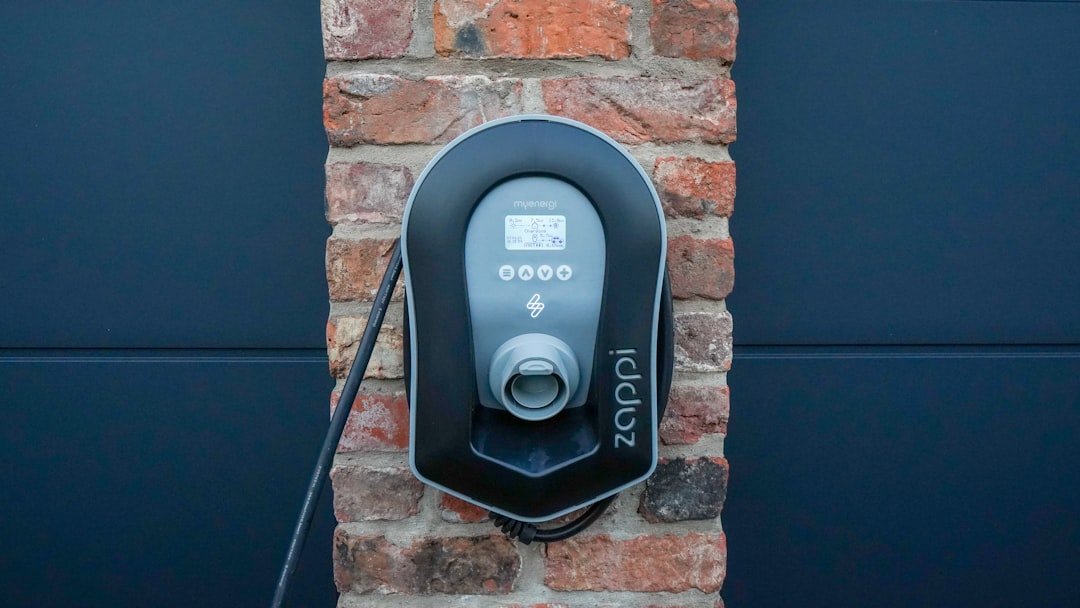
Amid public infrastructure woes, home charging presents a compelling workaround, bolstered by grants and innovative products. The Sustainable Energy Authority of Ireland (SEAI) offers a €300 grant for installations, reducing the effective cost of units starting at €1,199. Electric Ireland's zappi charger stands out, providing up to three times faster charging than a standard three-pin plug, with features like solar PV compatibility and app-controlled scheduling to optimize for off-peak rates.
Pairing such chargers with tariff plans amplifies benefits. Electric Ireland's Night Boost option leverages super-cheap rates from 2am to 4am, potentially yielding over €500 in annual savings for average users. A customer testimonial from Electric Ireland's Claire illustrates the impact: her previous petrol costs exceeded €200 monthly, now slashed to €30 with electric home charging. Similarly, Ford's partnership with Ohme, announced in Ford Authority, provides free home chargers and installation for Irish EV buyers, integrating smart metering for efficient energy use.
- zappi Charger Specifications: Solar PV compatible; app-based scheduling; 3-year warranty; charging speed 3x faster than standard plugs (up to 7 kW single-phase).
- Grant and Cost Breakdown: SEAI €300 subsidy; post-grant starting price €1,199; Night Boost integration for off-peak optimization.
- Savings Comparison: Petrol: €200/month average; Electric with home charging: €30/month, per user reports; annual savings potential >€500.
This home-centric approach not only mitigates grid strain by distributing load but also addresses practical concerns like range anxiety for daily commuters, drawing from RTE's analysis of why it's a "smart choice" for 2026 adopters.
Economic Ripples and Policy Imperatives
The infrastructure gap carries broader economic weight, influencing everything from consumer adoption to national climate compliance. EVs promise substantial savings—transitioning from €200 monthly petrol bills to €30 electric equivalents—but inadequate charging could deter buyers, slowing the shift and risking EU penalties for missing emissions targets. The Climate Change Committee's Northern Ireland assessment pegs net-zero costs at 0.2% of GDP yearly, with EVs generating operational efficiencies that offset investments.
Policy-wise, the Zero Emission Vehicles Ireland (ZEVI) initiative has built initial momentum since the early 2020s, yet funding and timeline gaps persist. Joint Committee testimony, as covered in the Irish Times, stresses that without scaled national investment, Ireland's ambitions remain aspirational. This mirrors global trends, where hybrids of home and public charging, combined with renewables, are key to sustainable growth. For industries, partnerships like Ford-Ohme signal a shift toward integrated solutions, potentially boosting local economies through installation jobs and tech exports.
Battery Wire's Take: Urgent Action or Missed Targets?
Ireland's EV strategy is fundamentally flawed without aggressive infrastructure scaling. The proposed 500 fast chargers are woefully inadequate against a 630,000-vehicle target, and grid delays represent a bureaucratic failure that could strand drivers and inflate emissions. Home charging innovations from Electric Ireland and Ford offer a lifeline, but they can't fully compensate for public shortfalls—policymakers must prioritize grid upgrades and double fast-charger deployments within two years, or risk derailing net-zero goals. Skeptics might argue the 2030 petrol ban is overstated, but with UK influences looming, complacency isn't an option; bold investment now will pay dividends in savings and sustainability.
Charting the Road to 2030: Investments and Innovations Needed
Looking ahead, Ireland must accelerate ZEVI-backed projects, targeting full utilization of the 1,500 fast-charger sites through streamlined approvals and renewable integrations. Northern Ireland's Fastned model could inspire Republic hubs, aiming for at least 1,000 new units by 2028 to meet halfway projections. Home charging grants should expand, perhaps doubling the €300 subsidy to encourage uptake among renters facing installation barriers.
Technically, advancements in smart metering and vehicle-to-grid tech could alleviate capacity issues, allowing EVs to feed power back during peaks. With 2025's 35% registration growth as a benchmark, 2026 could see even steeper rises if infrastructure catches up—failure to do so might cap adoption at sub-500,000 by 2030, per extrapolated supplier warnings. The path is clear: prioritize all-island coordination, leverage partnerships, and fund grid resilience to turn ambition into reality. Ireland's EV future hinges on decisive action today.