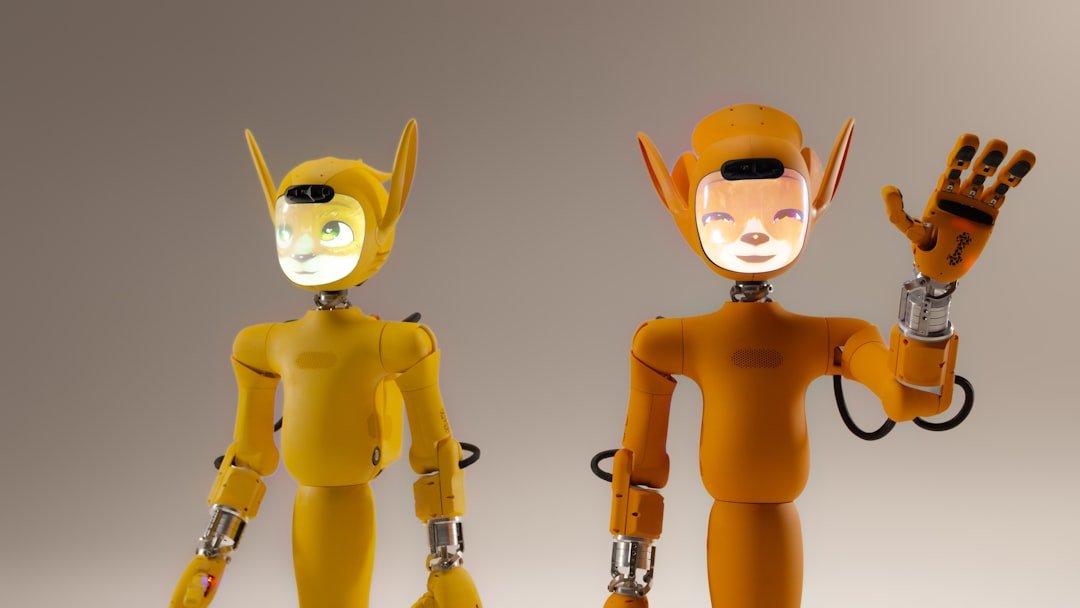
A Massive Cash Injection for Robot Revolutionaries
Picture a Munich startup, born from university labs in 2020, now commanding a half-billion-dollar valuation. RobCo just secured $100 million in Series C funding, hot on the heels of a $42.5 million round last year. Lightspeed Venture Partners and Lingotto Innovation led the charge, with big names like Sequoia Capital, Greenfield Partners, Kindred Capital, Leitmotif, and The Friedkin Group piling in. This isn't just money—it's fuel for scaling autonomous robots across factories, especially in the U.S., where labor shortages and reshoring are rewriting the rules of manufacturing.
The timing hits like a precision strike. Global spending on industrial robots topped $16.5 billion last year, according to the International Federation of Robotics. RobCo's secret sauce? A blend of perception tech, motion smarts, and self-learning AI that lets robots adapt on the fly. Forget the old-school bots chained to endless lines of code. RobCo's systems learn from demos, slashing setup from weeks to hours. Early wins at BMW show it's not vaporware—it's already humming in real production lines, outpacing clunky competitors.
Investors are betting big on this edge. As Lightspeed's Alexander Schmitt put it in a Business Wire statement, RobCo has the chops to dominate globally, with tech that's battle-tested and primed for expansion. Lingotto's Morgan Samet echoed that, calling out how autonomy will crown the winners in manufacturing. For RobCo, this cash means hiring sprees and infrastructure builds to tackle America's factory floors head-on.
Unpacking the Brains Behind RobCo's Bots
At its core, RobCo's platform fuses sensors, smart planning, and learning algorithms into robots that think for themselves. Multi-modal sensors blend visual, tactile, and positional data, giving bots a keen sense of their surroundings. Motion algorithms dynamically reroute paths around obstacles, thriving in messy factory chaos. And the self-learning bit? It uses reinforcement models to refine skills from human demos, ditching rigid scripts entirely.
This setup flips the script on traditional robotics. Old giants rely on programmers to script every twitch, but RobCo's bots evolve through trial and error, handling tasks like palletizing or machine tending with minimal fuss. Silicon Republic notes how this vertical integration—owning both hardware and software—avoids the headaches of mismatched parts. It's a seamless loop: updates roll out fast, turning one-off bots into subscription stars via a robotics-as-a-service model.
Details on specs like payload or precision are scarce, but client uses in welding and dispensing point to mid-range muscle, probably 5-20 kg. That's plenty for most industrial gigs. In a world of variable workflows, this adaptability shines, processing sensor floods to deliver autonomy that humans can't micromanage.
The payoff? Factories get leaner, faster. RobCo's approach tackles rising complexity, where bots must juggle unpredictable jobs without constant babysitting. It's practical innovation, not sci-fi—rooted in real needs like cutting downtime amid part variations.
Showcasing Wins on the Factory Floor
RobCo's tech is already proving its worth in the trenches. At BMW, bots tackle assembly lines with adaptive precision, tweaking for part quirks on the spot. Other clients like DynaEnergetics, Fabricated Extrusion Company, T-Systems, and Rosenberger use it for palletizing, dispensing, and welding. These aren't pilots; they're full-scale ops boosting efficiency in high-pressure environments.
Take the edge over rivals. Against ABB or Fanuc, RobCo slashes costs by nixing expert coders—setup drops from 100+ hours to under one via demos. Boston Dynamics might wow with walking bots, but RobCo owns stationary tasks through end-to-end control, ditching vendor tangles. Scalability? Offices in Munich, San Francisco, and Austin since last year let it span European finesse to U.S. volume production.
This isn't abstract. In automotive hubs, RobCo's systems learn from workers, bridging skill gaps without massive retraining. Business Wire quotes CEO Roman Hölzl: "We'll become the dominant AI robotics force in the U.S. and Europe, automating the mundane so humans chase the extraordinary." It's a bold play, backed by deployments that cut through labor woes.
Seizing the American Automation Boom
RobCo's U.S. push couldn't align better with market winds. Labor shortages bite hard, with reshoring pulling production home amid supply chain snarls. Silicon Republic details how the company's 2025 entries into San Francisco and Austin position it to capitalize. The $100 million will bankroll teams and tech to meet escalating demands for flexible automation.
Competitively, that full-stack ownership is a fortress. Custom arms and grippers sync perfectly with AI software, enabling rapid tweaks that modular setups can't match. U.S. robot density trails global leaders like South Korea, per International Federation of Robotics data, leaving a wide-open field. RobCo's service model turns sales into lasting revenue streams, fostering partnerships over transactions.
Skeptics might poke at scalability without hard revenue numbers, but the valuation surge and repeat investors like Lightspeed scream confidence. Behind-the-scenes metrics, from BMW retention to uptime wins, likely seal the deal. It's a calculated expansion, eyeing sectors like automotive and energy for quick gains.
Forging the Future of Factory Autonomy
RobCo's ascent is reshaping industrial automation, proving Physical AI can shatter efficiency ceilings. With the market ballooning past $16.5 billion, this funding spotlights self-learning as the new standard, forcing old players to evolve or fade. For supply chains, it means tougher, more adaptive ops against labor swings. Investors? They're eyeing AI's leap from servers to shop floors, with RobCo leading the charge.
Workforce ripples loom large—automating drudgery could spark job shifts, demanding retraining to keep humans in creative loops. But RobCo's head start, via proven tech and U.S. aggression, positions it to snag 10-15% of the American market in three years. Push transparent stats on precision and reliability, and it'll dominate. In a hype-filled arena, RobCo's real deployments make it the one to watch, sparking an AI robotics surge it seems built to win.