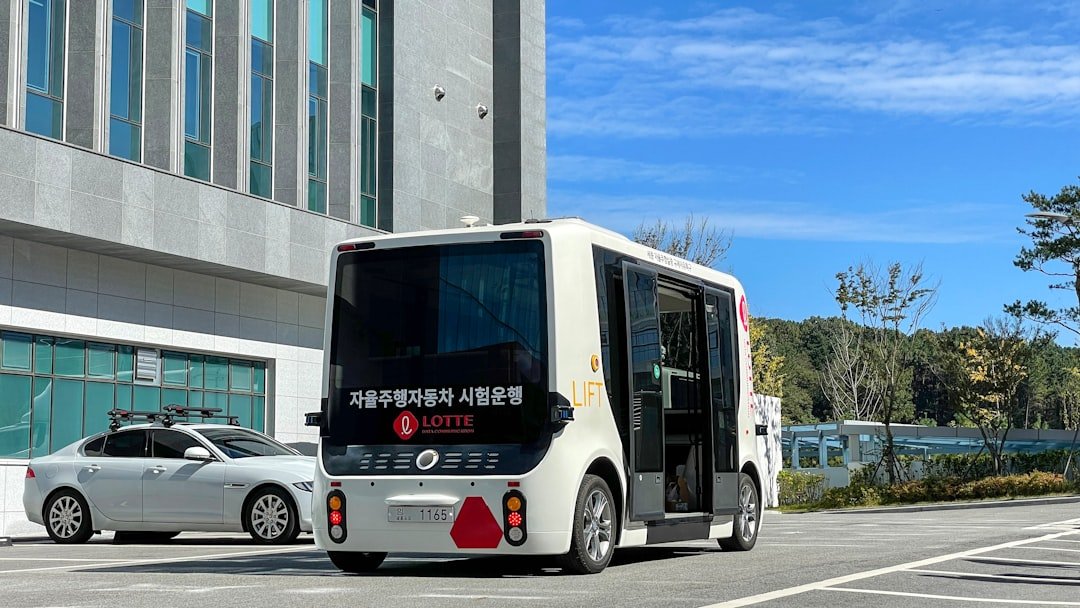
Purdue Leads Charge in Resilient Cyber-Physical Systems
Purdue University is spearheading a groundbreaking initiative in cyber-physical systems research with the 2024 launch of the CHORUS Center, backed by a $7 million grant from the National Science Foundation's Directorate for Computer and Information Science and Engineering. This five-year project, headquartered at Purdue in West Lafayette, Ind., focuses on enhancing resilience in autonomous transportation amid hardware failures, cyber threats and unpredictable human behaviors. Led by Saurabh Bagchi, a professor in the Elmore Family School of Electrical and Computer Engineering and the Department of Computer Science, CHORUS marks Purdue's first NSF CISE center and highlights the university's expertise in dependable technologies.
The center's interdisciplinary approach draws from Purdue's Daniels School of Business, agriculture and science divisions, emphasizing that resilient systems require more than engineering solutions—they demand economic, logistical and scientific insights. A Purdue ECE news release notes that CHORUS tackles the challenge of building highly dependable cyber-physical systems from unreliable components, a critical issue in autonomous transportation where failures could lead to catastrophic events. As the center prepares for its inaugural NSF site visit in February 2026, early progress suggests advancements in safety protocols for life-critical applications.
Collaboration extends to the University of Southern California, Georgia Tech and the University of Wisconsin-Madison, forming a multi-institutional consortium to address complex vulnerabilities in connected vehicle networks. This model fosters holistic solutions by integrating diverse expertise, from robotics to control theory.
Unpacking the Three Classes of System Perturbations
CHORUS's research centers on a framework that categorizes perturbations into three classes, providing a structured way to analyze threats to cyber-physical systems in autonomous vehicles. The first class covers naturally occurring errors in hardware and software, such as bit flips in memory or sensor glitches that impair accuracy and reduce system availability below 99.999 percent—a level unacceptable for functions like adaptive cruise control.
Malevolent security attacks form the second class, where adversaries exploit vulnerabilities in vehicle-to-everything (V2X) protocols to inject false data or cause delays, potentially leading to multi-vehicle incidents. The third class addresses unexpected human-system interactions, including operator overrides or misinterpretations that introduce instability, especially in semi-autonomous modes affected by driver fatigue.
This tripartite model, detailed in Purdue announcements, defines resilience as a system's ability to maintain functionality despite disruptions. Researchers like Shreyas Sundaram and Aravind Machiry apply graph theory for attack analysis and machine learning for anomaly detection, targeting applications with life-safety implications, such as urban mobility networks. Unlike DARPA's Cyber Grand Challenge, which emphasizes software vulnerabilities, CHORUS offers a comprehensive strategy by incorporating hardware resilience and human factors.
- Perturbation Categories:
- Naturally occurring errors: Hardware/software faults, e.g., sensor drift affecting localization accuracy.
- Malevolent attacks: Cybersecurity threats, e.g., spoofing in V2X communications.
- Human-system interactions: Unpredictable behaviors, e.g., erroneous inputs during handover from autonomous to manual control.
Strategies for Building Dependable Systems from Flawed Parts
CHORUS employs advanced fault-tolerant architectures to create resilient systems from unreliable components, such as using triple modular redundancy in vehicle controllers to mitigate failures and extend mean time between failures. Bagchi's expertise in distributed systems drives runtime verification techniques that detect deviations from specifications before they escalate.
Interdisciplinary input enhances this methodology: Purdue's agriculture division models perturbations like GPS jamming in rural settings, while business researchers, including Tim Cason, evaluate economic incentives for resilient designs. Somali Chaterji and Carla Zoltowski contribute AI-driven resilience and ethical human-machine interfaces, respectively.
Technical details include a focus on systems with latency under 10 milliseconds for safety functions, aiming for 99.9999 percent reliability—surpassing traditional automotive benchmarks and aligning with aerospace standards. A Purdue ECE news release highlights "significant progress in making cyber-physical systems safer and more reliable," supported by the consortium's publications in journals like Science Advances.
The multi-institutional setup, with Purdue leading and partners like Georgia Tech providing robotics expertise, enables cross-validation across testbeds, from simulations to hardware validations. However, transparency gaps, such as undisclosed budget distributions, raise questions about scalability and real-world applicability to platforms like those from Waymo or Tesla.
Implications for Transportation Safety and Beyond
CHORUS's work influences regulatory frameworks from the National Highway Traffic Safety Administration by addressing vulnerabilities that could prevent incidents like past autonomous vehicle fatalities caused by software glitches. By integrating business perspectives, the center extends resilience to market adoption, where insecure systems might deter investments in connected fleets.
Broader applications reach into aerospace, informing cyber-physical principles for unmanned aerial vehicles in air traffic management. A Purdue ECE announcement emphasizes the "life-saving implications for the future of transportation," though skeptics note that without industry partnerships, technology transfer could remain theoretical.
In analysis, CHORUS represents a crucial federal effort in autonomous system safety, with its perturbation framework offering a scalable blueprint. Success depends on bridging academic models to deployable technologies, potentially setting U.S. standards if the 2026 site visit unveils innovations.
Forging Ahead: Toward Mature Resilience in Autonomous Tech
Looking forward, CHORUS aims for full maturity by 2029, shifting focus to technology transfer and spin-offs in resilient software for fleets. Its interdisciplinary approach positions it to adapt to emerging threats, like quantum-resistant encryption for V2X links, though commercialization timelines remain unclear.
Purdue's commitment, evidenced by engineering news and publications in Science, promises gains in system robustness. If CHORUS navigates funding and collaboration hurdles, it could deliver the dependable infrastructure essential for safe autonomous transportation.