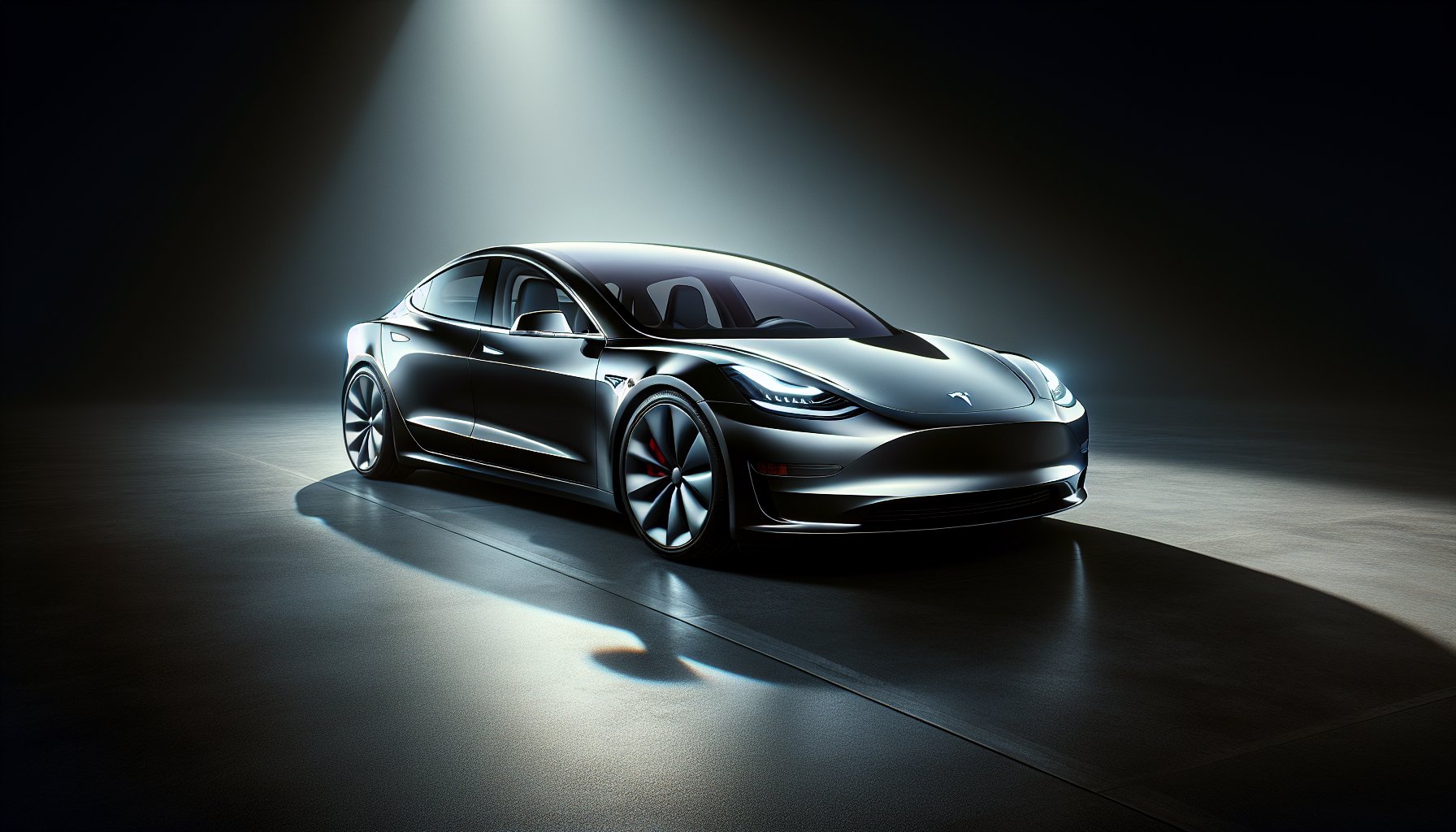
Picture this: You're cruising down a bustling city street when flashing lights appear in your rearview mirror. An ambulance screams past. Your car doesn't just react—it anticipates, smoothly pulling over like a seasoned driver who's done this a hundred times. That's the magic Tesla's Full Self-Driving (FSD) version 14 brings to the road in 2026. We've dreamed of cars that think like us, and now, with FSD v14, that dream edges closer to reality. This isn't science fiction; it's the latest leap in autonomous driving, crowned the best at the 2026 MotorTrend Best Tech Awards. But what makes it tick? Let's dive in.
What is Tesla FSD v14?
Tesla's FSD v14 isn't just another software update—it's a bold step forward in making cars safer and smarter. Rolled out starting January 2026 as part of the 2025.45.8 firmware, with version 14.2.2.3 leading the charge, this is the first FSD release of the year. Think of it as upgrading your smartphone's camera to see the world in ultra-high definition. Tesla has beefed up its neural network vision encoder, using higher resolution features to spot emergency vehicles, road obstacles, and even human gestures with pinpoint accuracy.
At its core, FSD v14 relies on end-to-end neural networks. These aren't rigid rulebooks; they're like a brain that learns from billions of real-world miles. Visual inputs from the car's cameras feed directly into driving controls, creating fluid, human-like decisions. No more jerky stops or hesitant merges—v14 glides through dense traffic, handles unprotected turns, and even navigates around blocked roads in real time. Tesla's official release notes highlight how it pulls over for emergency vehicles or offsets for road debris, much like dodging a pothole the size of a dinner plate on your morning commute.
And it's not all highways and heroics. In everyday scenarios, v14 shines in low-speed tasks. Imagine pulling into a multi-level parking garage: the car descends five levels, aligns perfectly to grab a ticket, and exits when the gate lifts—all in one smooth maneuver. Early tester Zack, known as @BLKMDL3 on social media, shared footage of exactly that, proving v14's prowess in tight spaces like garages, curbsides, and driveways.
Yet, remember, this is FSD (Supervised). It's classified as a Level 2 system by SAE standards, meaning drivers must stay alert, eyes on the road, with the cabin camera watching. Hands near the wheel? That's the rule, though camera-based monitoring has replaced some older torque checks. Tesla emphasizes constant attention, even as the system racks up collision-free miles.
Why Does It Matter?
Why get excited about yet another Tesla update? Because FSD v14 isn't just tweaking code—it's reshaping how we share the road with machines. In the 2026 MotorTrend Best Tech Awards, it snagged top honors as the best driver assistance system, outpacing rivals like GM's Super Cruise, Ford's BlueCruise, and BMW's Highway Assistant. MotorTrend praised its smoothness in city traffic, emergency interactions, and varied roads, calling it a "dramatic evolution" that mimics human driving more closely than anything else out there.
This matters for all of us chasing the electric vehicle revolution. Tesla's FSD has come a long way from earlier versions criticized for jerkiness. Now, with v14, it reduces driver fatigue by handling everything from driveway pullouts to highway merges. Real-world tests show it conquering canyon roads with confident overtakes and even completing a full coast-to-coast drive with zero interventions, as reported by Teslarati. That's thousands of miles without a hitch, according to MotorTrend's testers.
But let's be real: it's a leap in the autonomy race. Competitors lag in that seamless driveway-to-highway flow, and Tesla's over-the-air updates let it iterate faster than anyone. Amid NHTSA scrutiny and regulatory hurdles, v14 addresses key pain points like vehicle cut-ins, school buses, and system faults with better recovery. It's not perfect—some users note hesitation or slower speed adherence in v14.2 compared to priors—but the consensus? Incremental gains that feel exponential in safety and fluidity.
Think about it: In a world where AI drives innovation, end-to-end models like this outpace old-school, rule-based systems. We're not just building better cars; we're forging a future where technology anticipates our needs, making roads safer for everyone.
Breaking Down the Tech: Simple as Pie
Diving into the tech doesn't have to feel like cracking a code. At heart, FSD v14 upgrades the car's "eyes"—its vision system—to handle chaos with grace. The neural network now processes higher-res images, spotting an emergency vehicle's lights from farther away or reading a cyclist's hand signal like a friend waving you through traffic.
Navigation gets a boost too. Blocked road ahead? V14 reroutes on the fly, using vision-based smarts instead of outdated maps. Speed profiles? Choose from Chill, Standard, Hurry, or Mad Max modes, though aggressive settings raise eyebrows for safety. And for those rainy days, it even alerts you to windshield residue that might blur its view.
Safety shines in the details. Enhanced fault recovery means if something glitches, the system degrades smoothly, not abruptly. MotorTrend's review notes collision-free operation over thousands of miles, a testament to its robustness. In high-speed scenarios, it merges like a pro on highways, while low-speed awareness lets it park confidently—think aligning to a curb as neatly as slotting a book on a shelf.
To see how it stacks up, here's a quick comparison based on MotorTrend's insights:
| Feature | FSD v14 Improvement | Competitor Note (MotorTrend) |
|---|---|---|
| Emergency Vehicles | Pull over/yield via upgraded vision | Unmatched fluidity |
| Parking/Navigation | Single-maneuver garages, detours | Driveway-to-highway unmatched |
| Dense Traffic/Highways | Human-like merges/turns | Outpaces Super Cruise/BlueCruise |
| Safety Reliability | Fault recovery, collision-free miles | Level 2 caveats persist |
These aren't just bells and whistles; they're targeted refinements. Elon Musk hyped a 10x parameter increase and "exponentially better safety" back in August 2025, but the actual release focuses on vision and behavior tweaks. According to sources like Tesla Oracle, it's about quality over sheer scale—though exact parameter details remain unclear.
What's Next for FSD?
The road ahead? Bumpy but bright. Tesla's pushing v14 to Cybertrucks after a brief delay, targeting early 2026 for those owners. Wider rollout hits the U.S. and Canada, with prep for Europe, though regulatory nods are pending. No unsupervised FSD for consumers yet—that's Robotaxi territory, live in spots like Austin and the Bay Area but separate from everyday drives.
We can't ignore the gaps. Quantitative crash data? Scarce. Disengagement rates? Not detailed. And those user reports of hesitation? They suggest v14 needs more wide-scale testing. Still, I believe this is Tesla charging ahead, positioning FSD as the gold standard.
Why does all this matter? Because FSD v14 isn't just about safer drives—it's about reimagining mobility for humanity. We're on the cusp of cars that learn, adapt, and protect us like never before. In 2026, Tesla turns hype into heroics, proving that with each update, we're one step closer to a world where driving feels like flying. Let's embrace it.