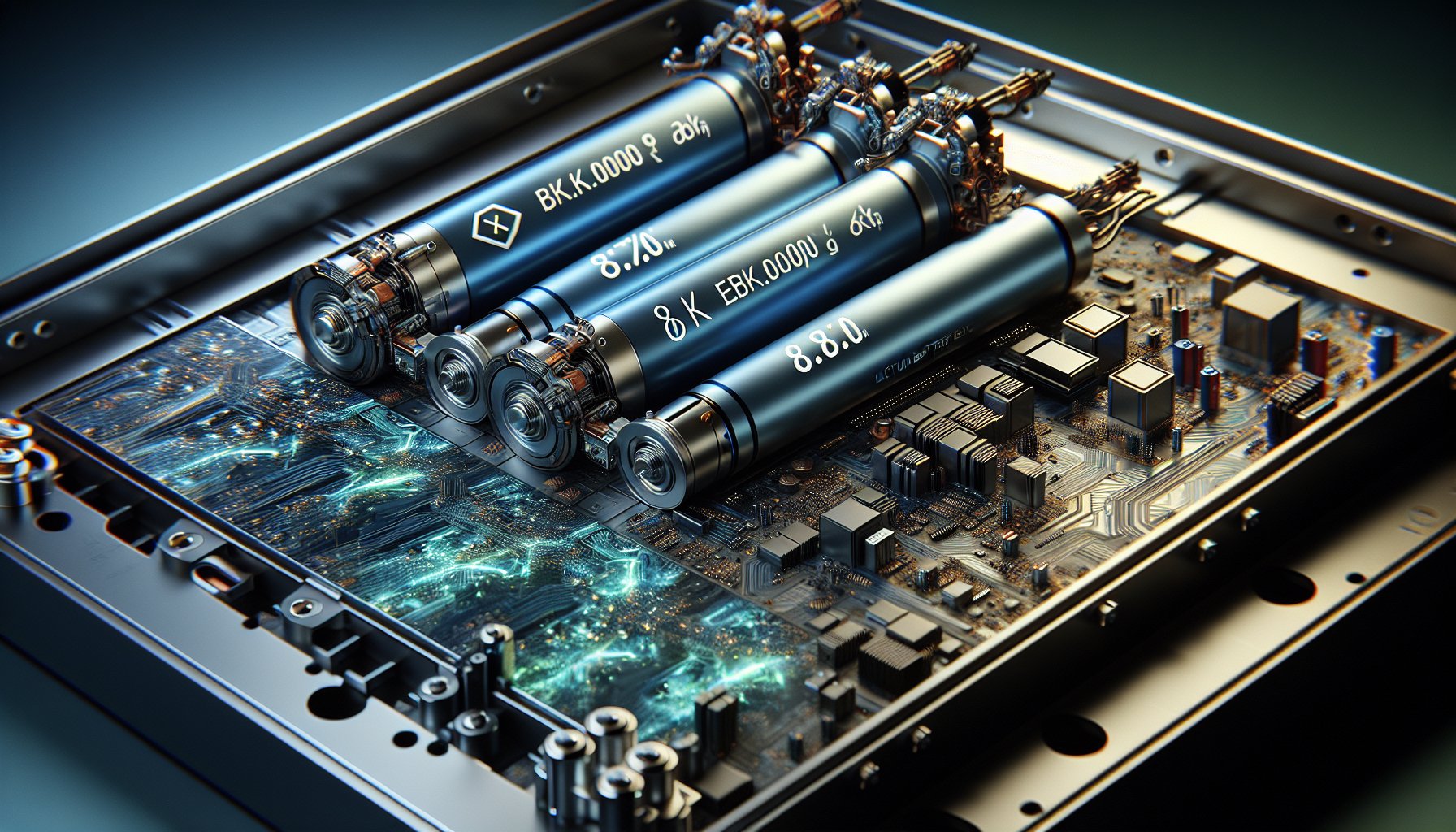
Plunging Batteries into the Future
Imagine the roar of a Formula E race car screaming down the track, its battery pack pushing limits without melting down. That's the promise of immersion cooling, a tech that's dunking EV batteries straight into dielectric fluids for superior heat management. Forget the old air-cooled relics or even the plumbing-heavy liquid systems—immersion submerges cells directly, slashing heat buildup and boosting performance. TotalEnergies highlights how this method cranks up dissipation rates by up to ten times, cutting thermal runaway risks during blistering fast charges and stretching battery life by about 30 percent. It's lighter, cheaper in the long run, and already battle-tested in high-stakes motorsports like Rimac's hypercars.
But it's not just speed demons benefiting. As EVs gun for 50 percent of global sales by 2030, immersion cooling aligns perfectly with the demand for high-energy-density batteries packing over 300 watt-hours per kilogram and charges that hit 80 percent in under 15 minutes. Companies like CATL and NIO are gearing up for mass production around 2027, with packs like the Shenxing Pro and NIO's 150 kWh beast leading the way. Still, hurdles like upfront costs and tricky retrofits loom large, especially against the backdrop of water-based liquid cooling's dominance, which boasts a thermal conductivity of around 0.6 watts per meter-Kelvin.
Evolution from Air to Full Submersion
Battery cooling in EVs has come a long way since the days of simple fans blowing ambient air over packs. As voltages soared and fast-charging hit 350 kilowatts or more, indirect liquid cooling took over, using high-heat-capacity fluids to keep temperatures even. Now, immersion cooling flips the script by fully bathing cells in non-conductive liquids, delivering direct heat transfer that air can't touch. A review from the International Journal of Innovative Industrial Research & Development spells it out: this direct contact crushes thermal gradients, keeping cell-to-cell differences under 5 degrees Celsius.
That's crucial for different battery chemistries. Lithium-iron-phosphate cells can handle up to 60 degrees, while nickel-manganese-cobalt and nickel-cobalt-aluminum types max out at 45. Immersion shines here, especially in high-voltage setups where uneven heat speeds up wear. Tools like MATLAB/Simulink or GT-Suite, as noted in PatSnap's EV battery design reports, use computational fluid dynamics to simulate and perfect these systems. TotalEnergies points to its edge in fast-charge scenarios, where heat spikes are brutal, ultimately helping EVs cut emissions by making electrification more reliable.
Designs vary by cell type—bottom plates for cylinders, side methods for prisms and pouches—but immersion is pushing boundaries. It's enabling more integrated architectures, though it trades some modularity for efficiency. In the end, this tech isn't just about keeping things cool; it's about reshaping how we build batteries for a greener road ahead.
Why Immersion Outpaces the Competition
What sets immersion apart? It's all in the direct dunk, yielding heat transfer that's leagues ahead of air cooling's feeble efforts. TotalEnergies clocks it at ten times the dissipation power, a lifesaver during fast charging when resistances turn cells into mini furnaces. Traditional liquid cooling, still king according to the International Journal of Innovative Industrial Research & Development, leans on water's conductivity but drags in heavy pipes and added costs. Immersion skips that mess, using insulating fluids that double as coolants, nixing short-circuit risks while ensuring even temps.
PatSnap's analyses back this with fluid dynamics simulations showing temperature spreads below 5 degrees Celsius, key to stopping thermal runaway in packed modules. Hybrids are popping up too, mixing immersion with phase-change materials for extra passive cooling. IDTechEx spots this in high-voltage packs, where it fixes modular flaws but complicates fixes. Air cooling? Cheap and easy, but it leaves big hotspots over 10 degrees apart, fine only for low-power gigs. Indirect liquid offers precision with its 0.6 W/mK edge, yet immersion's 30 percent life boost and fast-charge prowess make it the emerging champ—despite retrofitting pains.
CIDETEC Energy Storage's recent insights from April 2025 call direct liquid cooling a game-changer, with big investments flowing into durable, energy-dense batteries. Think Tesla's 4680 cells in cell-to-body setups: immersion could supercharge them, but PatSnap warns of safety regs slowing the roll. It's efficient, yes, but demands smarter designs to shine.
Racing Roots and Real-World Rollouts
Immersion didn't start in showrooms; it revved up in motorsports. XING Mobility has been at it since 2015, teaming with Castrol (a BP arm) in 2021 to tweak fluids for max power and safety, per Batteries News. These low-viscosity wonders cut pumping drag while handling extreme dielectric demands. Rimac and Formula E racers prove it works, taming heat in scenarios that would fry older systems.
Now, it's hitting the streets. CATL's Shenxing Pro and NIO's 150 kWh pack are scaling immersion for everyday EVs, aiming for 350-kilowatt charges that fill 80 percent in under 15 minutes. PatSnap predicts full production by 2027, fueled by these trailblazers amid supply chain squeezes. But IDTechEx flags costs and service woes—immersion might integrate smoothly, as TotalEnergies claims, yet CTB designs could make repairs a nightmare compared to swappable liquid modules.
The arc from track to traffic is clear, matured through 2020s partnerships. Geopolitical battery battles are pushing it faster, but without tackling those practical snags, immersion risks staying elite.
Safety Gains and Market Shifts
Beyond performance, immersion redefines EV safety by quashing thermal runaway risks. Fluids soak up heat fast, per TotalEnergies, vital for packs over 300 watt-hours per kilogram where imbalances slash lifespan. Frontiers in Mechanical Engineering ties this to cell-to-body trends, boosting structure but inviting crash safety scrutiny.
Partnerships like XING-Castrol are speeding hybrids with phase-change backups, while PatSnap stresses modeling from basic thermal sims to full CFD for service-ready packs. Costs sting, especially in price wars across China and Europe, where IDTechEx sees refrigerant needs spiking. Skeptics downplay retrofitting ease, drawing data center parallels, but immersion's life-extending, emission-slashing upside makes it a winner for sustainable transport.
Betting on Immersion's Breakthrough
Immersion cooling is set to storm EV batteries by 2027, with CATL and NIO paving the way through smart investments. IDTechEx forecasts a boom in these methods, especially where emission goals demand rapid electrification. Refined fluids and optimized designs will nail those under-5-degree gradients across chemistries, making ultra-fast charging routine.
OEMs like Tesla will watch and pounce, per CIDETEC's 2025 take, but success demands modular tweaks to dodge service pitfalls. This isn't hype—it's the edge high-performance EVs need. Immersion will claim its spot, driving us toward a cooler, faster electric future.